
Voice and visual search will ultimately become important engines for query volume beyond text input.
The future of the search begins with the letter “v” (voice, visual) - in voice and visual search.
Voice Search. Obviously, voice will be a universal interface for an increasingly diverse set of connected devices. The phrases “voice search on a computer” are already used in Yandex and Google. Unwillingness to type has affected all countries, so we are developing Russian voice search at a fast pace. However, the often cited statistics “50% of all searches in 2020 will be voice-activated,” has been discredited. However, in 2016, Google said: “In the Google app, 20% of search queries are now voice-activated.” Since then, the use of voice and virtual assistants has increased significantly.
Therefore, although this may not be 50%, voice input (on smartphones) already causes a non-trivial percentage of requests. We just don’t know exactly how much, because Google does not show this in statistics. And we tend to overestimate the effect of technology in the short term and underestimate the effect in the long term. So it will be with Google voice search.
Read more:
How do SEO voice queries help?
The secret to promoting Google Images
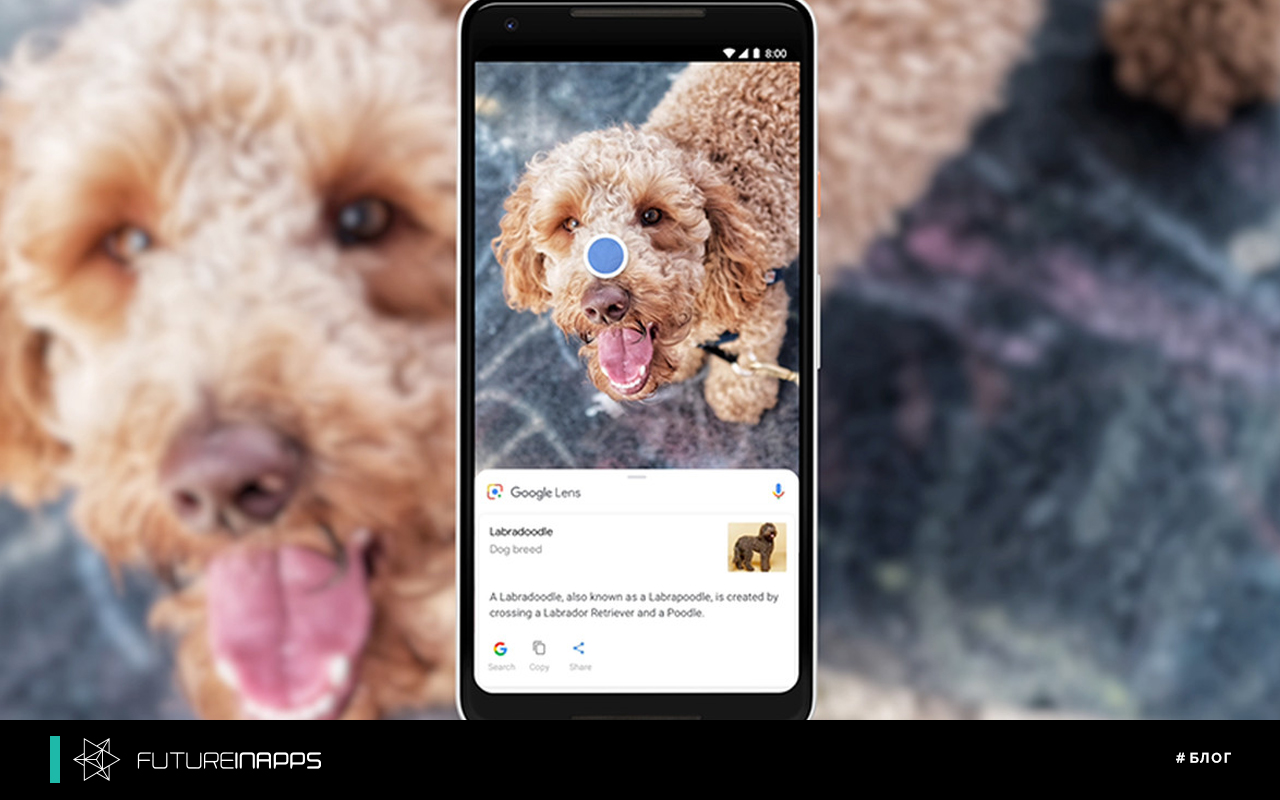
Google and Bing visual search are moving fast. Visual search is less mature than voice search, but offers another compelling alternative to entering text in a field. Users know how to search a picture from a mobile phone - you go into the Google application and then on your computer. But Google is rapidly developing its new Lens picture search service, which now has a wide range of features: text translation, restaurant menu search, barcode scanning, clothing search by photo, and even clone search by photo. The most interesting thing for business is the search for goods by photo in the phone. More recently, Google introduced “style ideas,” where users can search for clothing in stores or otherwise in real life and see similar items, with the ability to buy many of them.